Back to home

Future Makers

Innovation, design, agency. The people and practices shaping what comes next, and the deliberate choices behind the tools, systems and worlds being designed.

Innovation, design, agency. The people and practices shaping what comes next, and the deliberate choices behind the tools, systems and worlds being designed.

Connected Sessions

Session

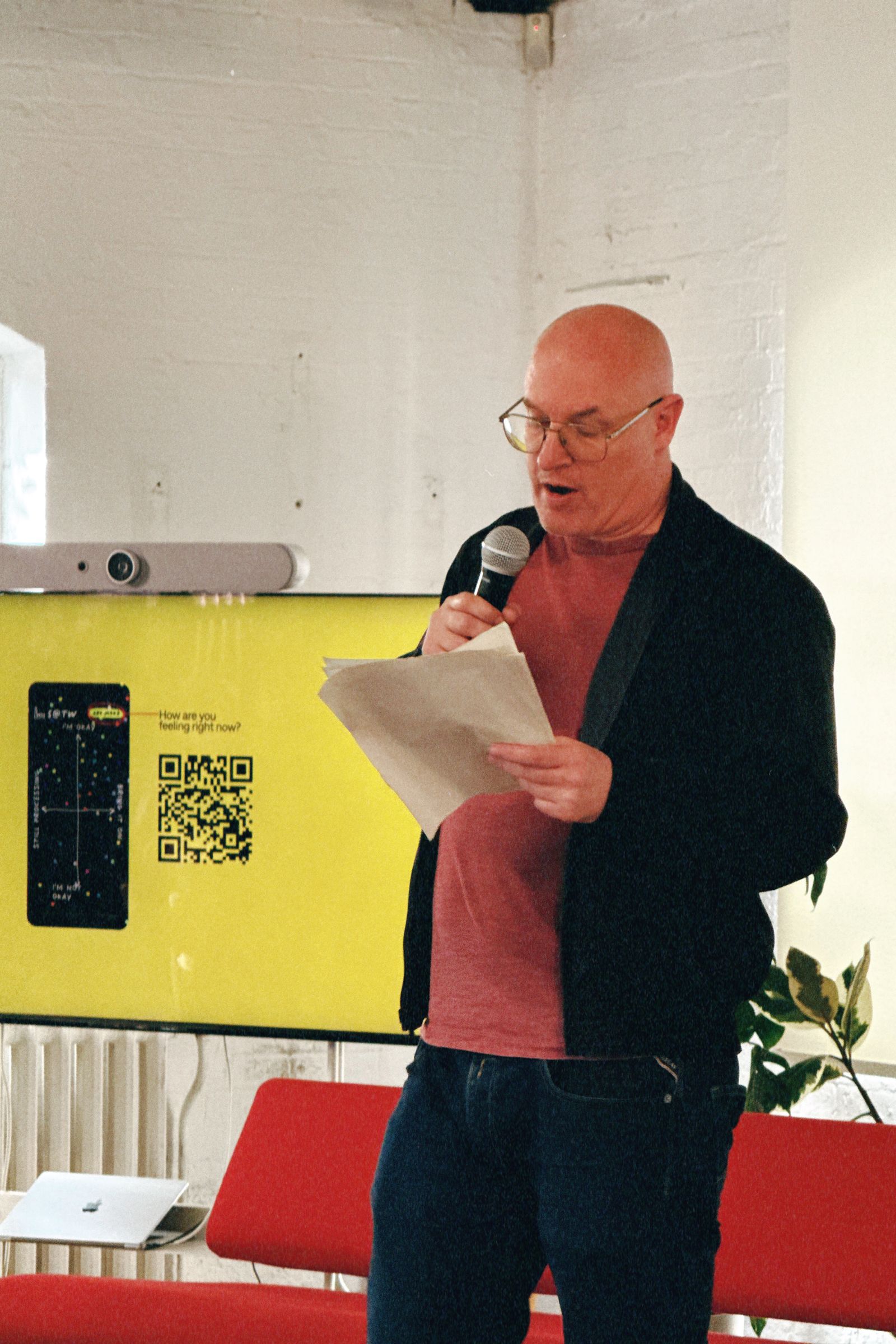
Tim's Intro

Session

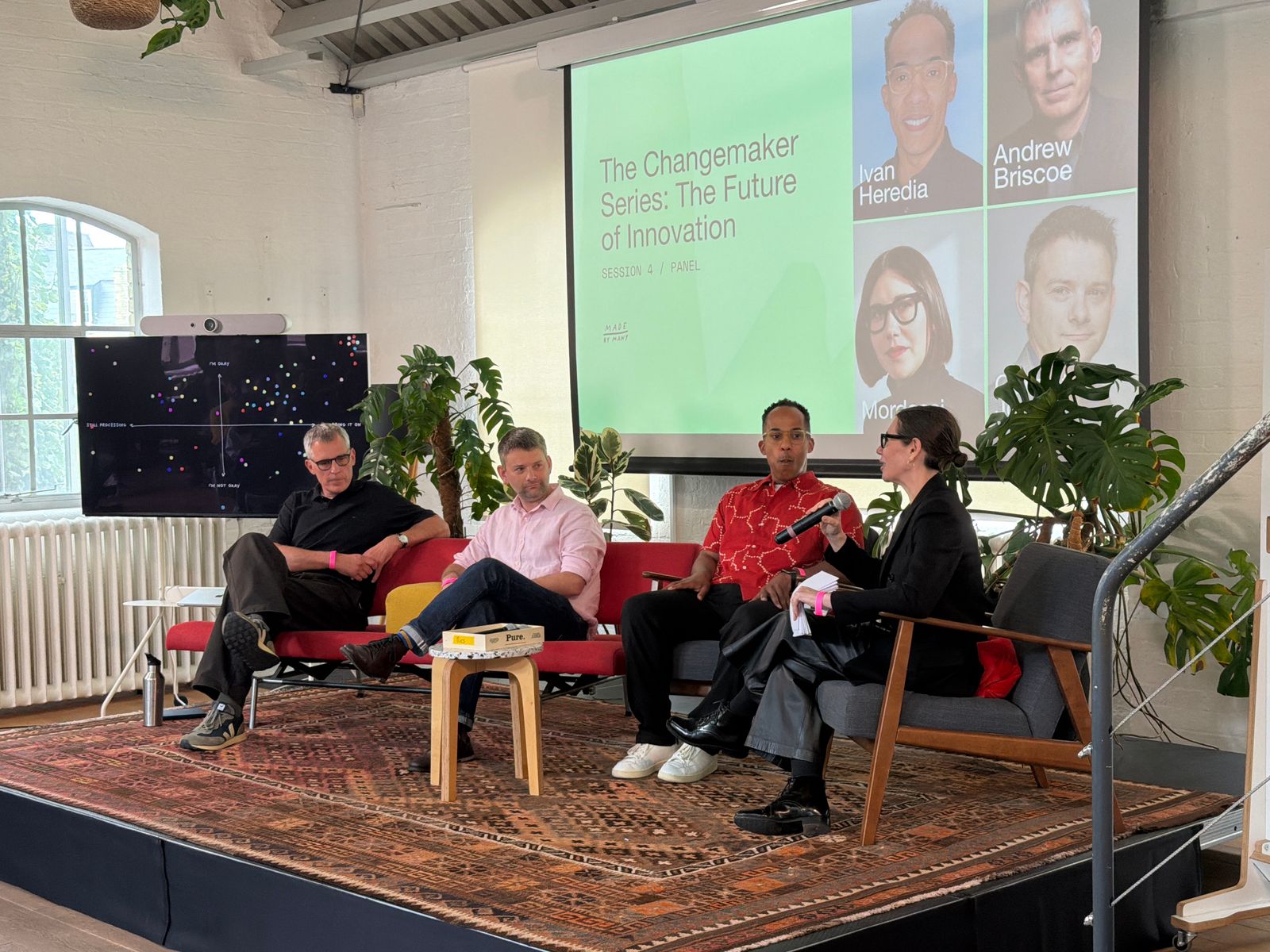
The Changemaker Series: The Future of Innovation

Session

Make It: A Showcase of Experiments with AI

Session

How Sci-fi Inspires Tech Innovation

Session

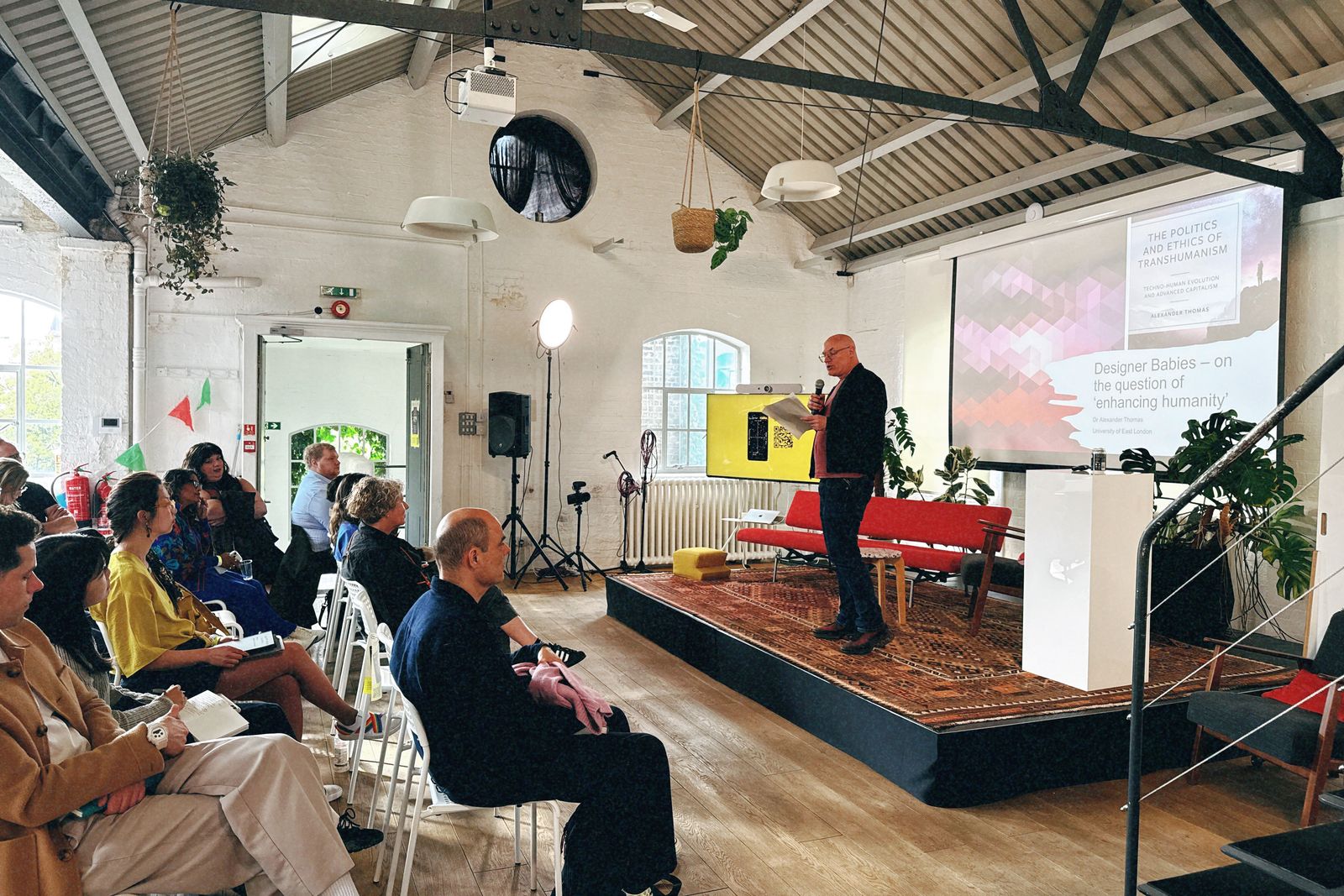
Rogue Talks: Designer Humans

The Value of Intimate Gatherings

Meaningful connections and serendipitous interactions are more likely to occur at smaller-scale events compared to massive, highly-produced conferences.

“I'm talking about the weirdest stuff. The stuff that happens around the edges, around the periphery, around the fringes of the festival”

TM

Tim Malbon

From: Tim's Intro

The Value of In-Person Connection

In an era dominated by digital loneliness, AI-generated content, and remote work, physical gatherings provide essential, high-value human connection that cannot be replicated by digital tools.

“with all the kind of, you know, AI slop and algorithms and Microsoft Teams calls... I think it's even more special and valuable to be in a room together”

TM

Tim Malbon

From: Tim's Intro

The pursuit of human enhancement prioritizes future utility over immediate biological health.

While the rhetoric of design often centers on the baby, the underlying objective is the cultivation of a specific type of adult. We are less concerned with the infant's immediate state than with engineering future capabilities and intelligence.

DA

Dr Alexander Thomas

From: Rogue Talks: Designer Humans

The Value of In-Person Connection

In an era dominated by digital loneliness and synthetic media, physical gatherings provide a unique and essential space for genuine human interaction that cannot be replicated by virtual platforms.

“real conversations matter. Being in the room matters. Yeah? The conversations between the conversations matter.”

TM

Tim Malbon

From: Tim's Intro

Meaningful connections often occur in the margins of formal events, during the informal moments between scheduled sessions.

TM

Tim Malbon

Founder and CEO, Made by Many

Some of the most groundbreaking innovations shaping our future have been inspired by Sci-Fi.

JK

Jenny Kleeman

Freelance Journalist, Author, and Broadcaster

Our values are not freely chosen

DA

Dr Alexander Thomas

Senior Lecturer in Film and Media, University of East London

Individual-first tools create friction in shared spaces.

Personal AI privatises what used to be collective and visible — the fridge to-do list moves inside one person's glasses — and strips conversation of its natural ephemerality. ("Space is not faces.")

“So the to do list that is currently on the fridge where everyone can see it is going to become something that only I can see inside my glasses.”

EH

Erin Hackett

From: My AI vs Our AI

Tech companies are good at shipping technology but bad at figuring out what it's for — which is why default AI gets plugged straight into the broken social media ecosystem. It takes artists and creatives poking at it to discover what's actually good, and that in turn reshapes the tech. Opting out on principle just cedes the field.

IT

Iain Tait

Founder and CEO, Made by Many

Human storytelling got it exactly in the reverse: we are the creators of God, and we will create God in our own image.

DA

Dr Alexander Thomas

Senior Lecturer in Film and Media, University of East London

Multiplayer AI is a Trojan horse for old, unsolved relational problems.

Adding people to a conversation is easy; the layer underneath — permissions, turn-taking, accountability, and what a shared AI should remember and for whom — is genuinely unsolved.

“What a shared AI should remember and for whom That's still very much unsolved.”

EH

Erin Hackett

From: My AI vs Our AI

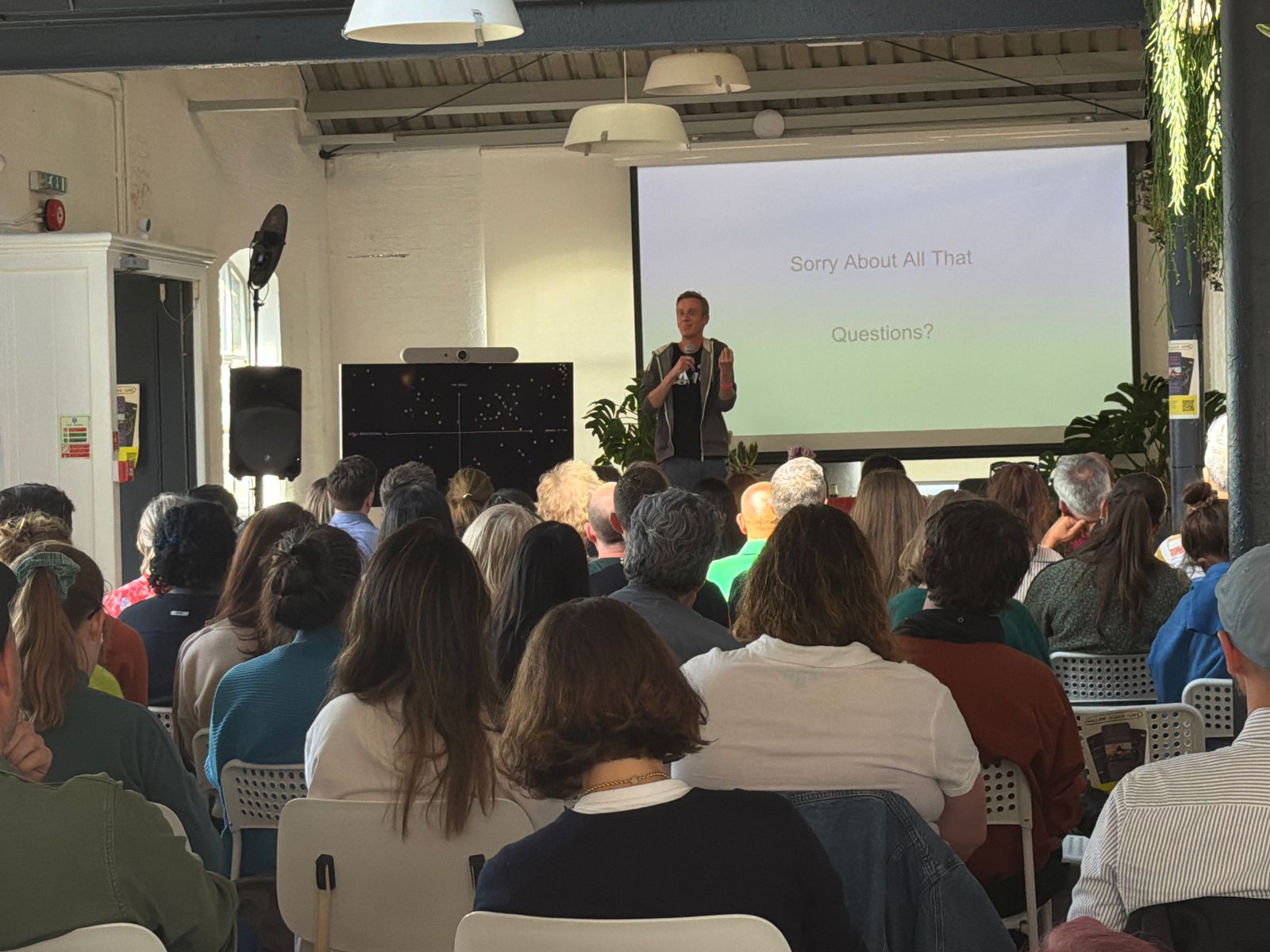
How do you sell this kind of new, unfamiliar work to clients who've never seen anything like it?

"Not very well. [But] because we have this confidence — and a network of collaborators with this creative confidence — what we're selling a lot of now is, no one knows what the hell they're doing, no one can see three or six months out. So the trick is to go: we don't know what you need either. Let's talk about it, then go make a bunch of things. Because right now we're telling you stuff, and you don't know how that feels." The follow-on point that lands it: briefs now tend to evaporate after the first meeting — "we tried to write a brief, but we don't really know what we're asking for" — because the old RFP loop was always fiction anyway.

IT

Iain Tait

From: Make It: A Showcase of Experiments with AI

Good AI makes work harder and more valuable — not just cheaper

The dividing line isn't AI vs. no AI; it's intent. Bad AI chases efficiency and cost-cutting and replaces human creativity. Good AI creates new value and lets people attempt things that were previously impossible — and teaches you as you build, giving the confidence to make things you couldn't have six months ago.

“But at the same time, if we don't do it, if good people don't do it, then what gets left is a bunch of assholes shaping the technology into something terrible.”

IT

Iain Tait

From: Make It: A Showcase of Experiments with AI

Memory and data are inherently social, yet our systems are database-first.

Today's memory serves the company more than the user. A social lens means modeling relationships and shared understanding, not just logging individual data points.

“At the moment, the way that we experience memory in our systems today is you are sort of expected to go somewhere in the settings and find individual data points that are more useful really to the company than to you.”

SG

Sarah Gold

From: My AI vs Our AI

AI works best as a coordinator, not a participant.

AI-generated content isn't "load-bearing" because it represents no one in the room. The winning pattern is managing group memory and connecting people to the right human expertise — and native models still lack the social intuition to know when to speak or defer.

“I'm more intrigued about Bose. What does an AI look like when it belongs to a group together... It helps coordinate. It provides some memory. It can refer backwards, but it doesn't actually participate like a person does.”

MW

Matt Webb

From: My AI vs Our AI

The real barrier in big companies isn't ideas or budget — it's the permission bottleneck

In large, matrixed organizations the constraint is rarely ideas or resources — it's permission. Progress comes from engendering belief through proof points and micro-experiments, not from technology.

“The biggest challenge isn't the lack of ideas… They've got the resources and everything. It's permission. It's really not a technology problem, but a legitimacy opportunity.”

IH

Ivan Heredia

From: The Changemaker Series: The Future of Innovation

Is innovation ideation, or execution?

Innovation only becomes real when an organisation solves an actual problem and ships something; an idea on its own doesn't count.

“Innovation doesn't happen. It doesn't become real until an organization actually does something… You've got a problem that you're solving, you have an idea that gets after that in a way that's not been done before, and you are executing on it.”

IH

Ivan Heredia

From: The Changemaker Series: The Future of Innovation

Trust is bound to the human behind the content — and identity tools carry social risk.

Decoupling a contribution from its author destroys its credibility. Verification tools must be designed for the "unhappy paths," where the other party isn't who they claim to be.

“It feels like trying to decouple the person who is contributing from their contribution... leads to failure.”

EH

Erin Hackett

From: My AI vs Our AI

AI can scale serendipity while protecting creative weirdness.

Freed from the consensus bottleneck, small teams get weirder and more personal, and prototyping hard, human-acceptable tools exposes what big labs still can't do. The bigger prize: acting as a "virtual yenta" that restores and scales the serendipitous connection physical hubs once provided, reaching talent outside London or San Francisco.

“It's people socializing together and serendipity. ... If only there can be some kind of serendipity that brings people together. ... And it's a place where automation could really help.”

MW

Matt Webb

From: My AI vs Our AI

We shouldn't be starting from a blank whiteboard anymore. The prompts from AI should have a thousand post-its on the wall — as a place of discernment — and then you can proof-of-concept as you go.

M

Mordecai

Marketing and growth leader

They're allowed to be weird and personal because they didn't have to persuade other people they're good ideas.

MW

Matt Webb

Associate Director, Stripe Partners

Life isn't single-player — but AI is built as if it were.

AI today assumes individual accounts, private chats, and personal devices, yet real decisions and daily life are collaborative. "Multiplayer AI" spans people sharing a room, collaborating remotely, and agents acting for groups — and the right approach starts from the human and trust, not from scaling single-player tech.

“Those sorts of relational design moments are still really tricky to design for. We often don't get them right.”

EH

Erin Hackett

From: My AI vs Our AI