They're allowed to be weird and personal because they didn't have to persuade other people they're good ideas.



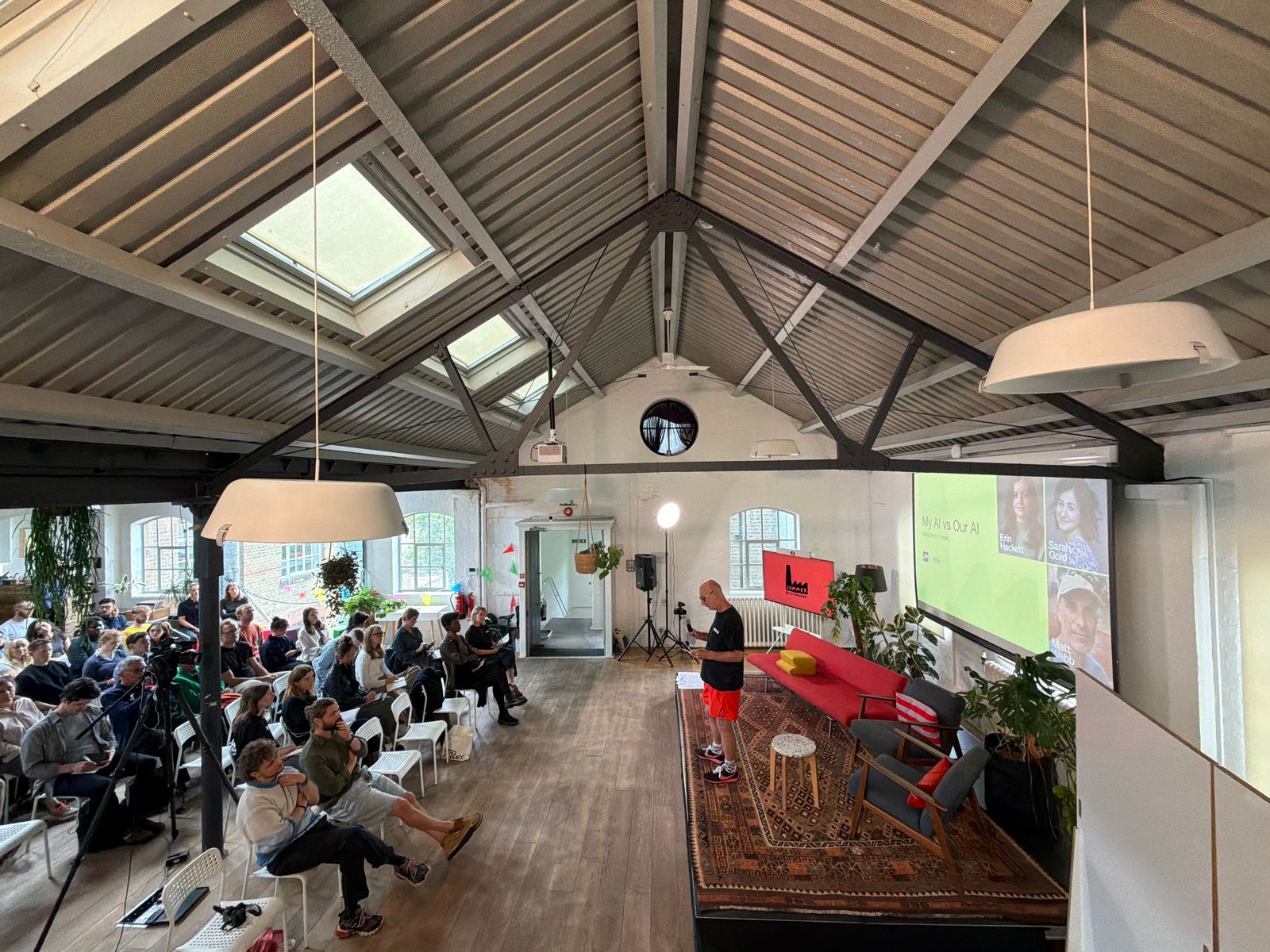
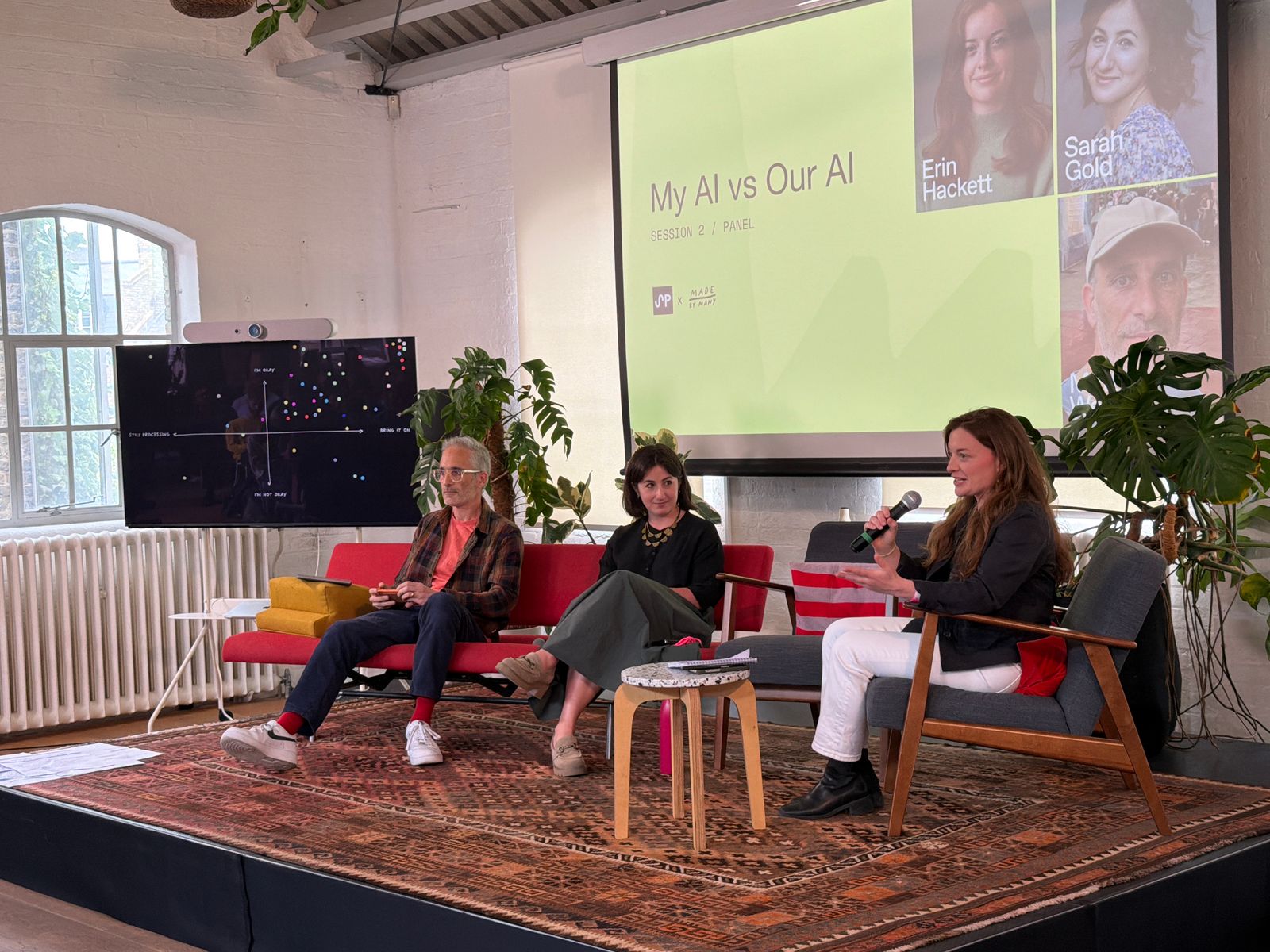
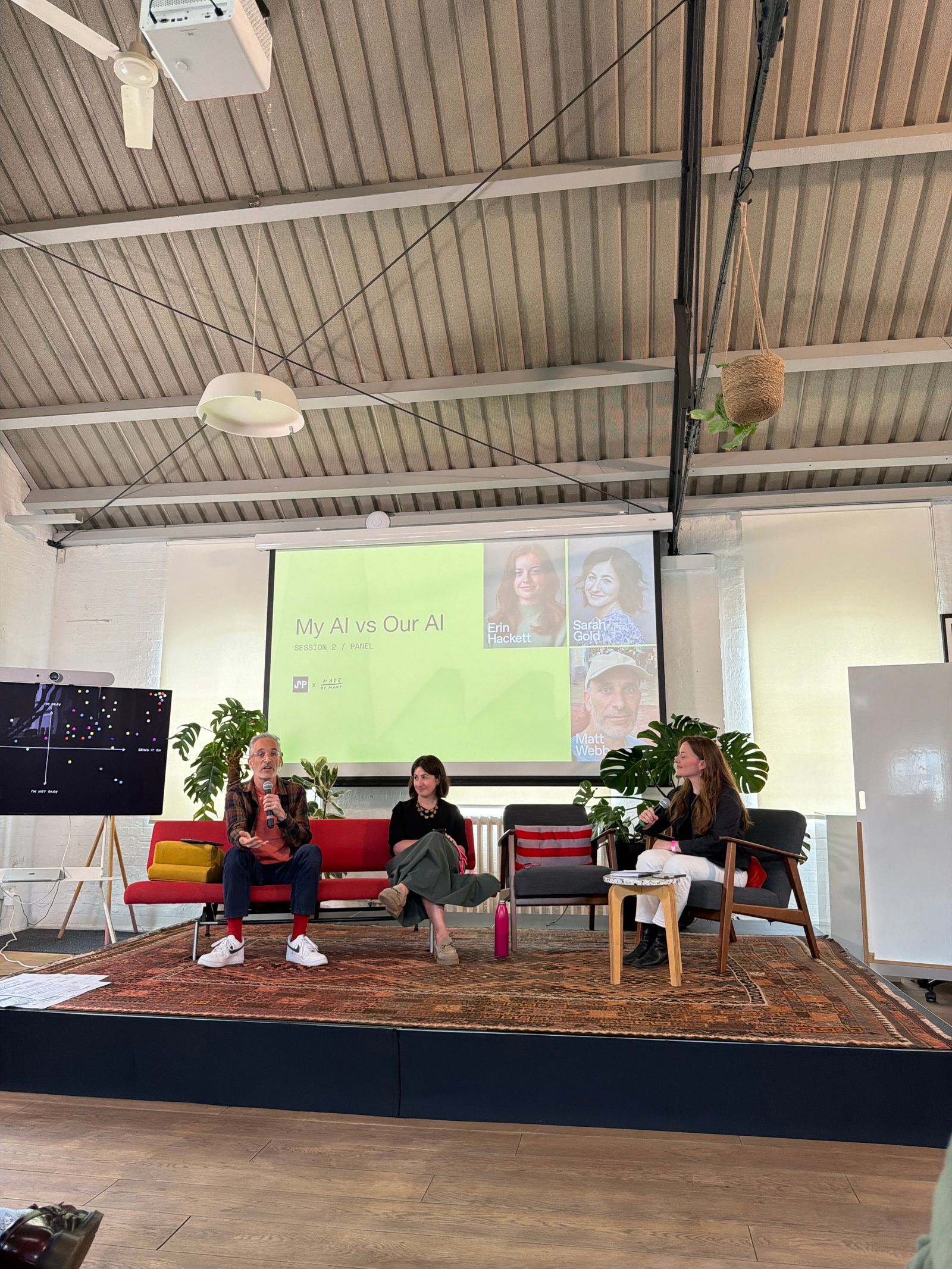
My AI vs Our AI
Erin Hackett, Sarah Gold and Matt Webb
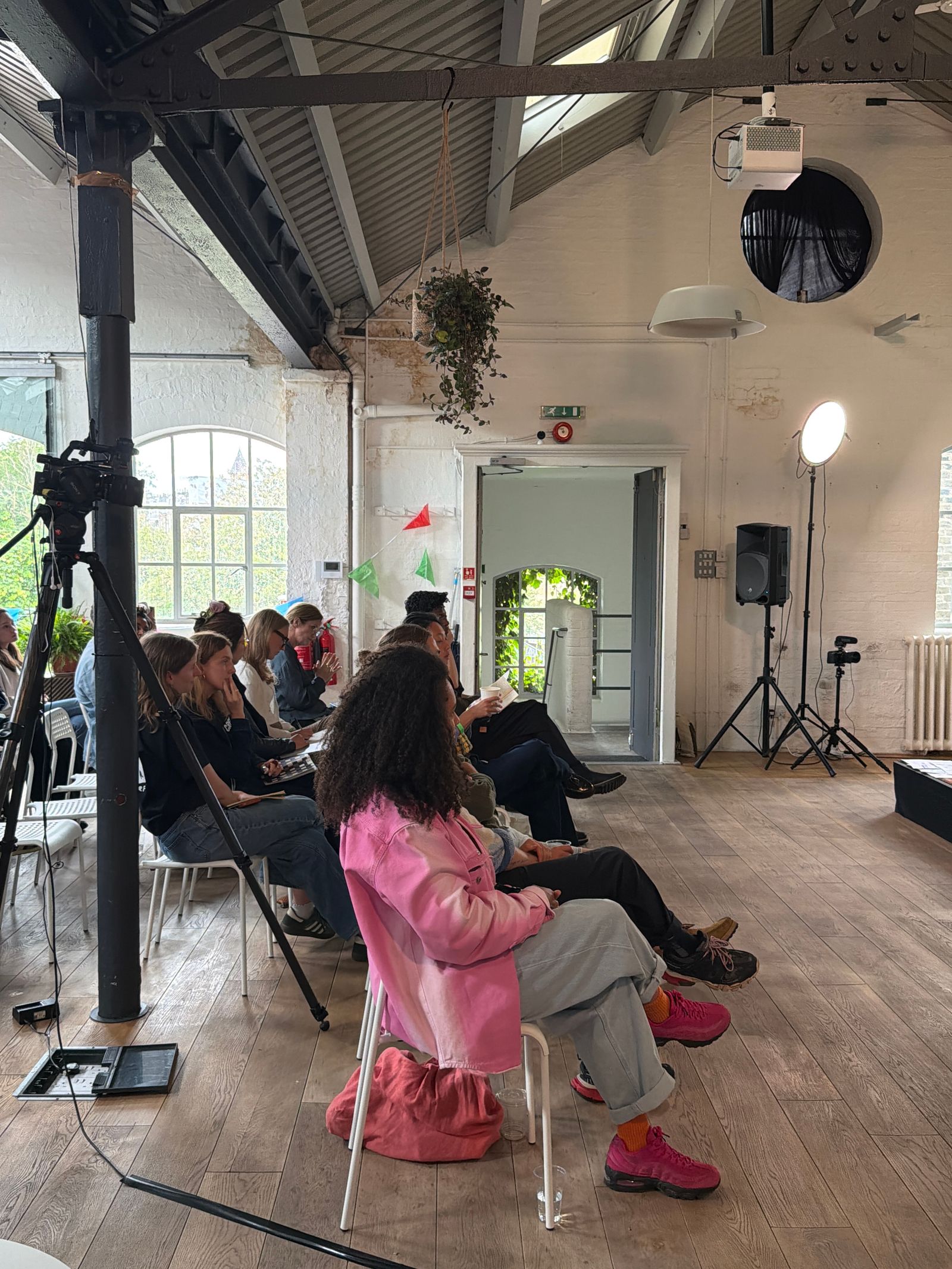
This session explored the tension between individual-centric AI tools and the collaborative nature of human life. Speakers Erin Hackett, Sarah Gold, and Matt Webb examined how current technologies prioritize personal productivity at the expense of shared decision-making and community dynamics. The discussion highlighted the critical need for multiplayer AI architectures that support families, colleagues, and collective futures, ultimately questioning how we can shift from optimizing for the individual to fostering tools that serve our shared social experiences.
Individual-first tools create friction in shared spaces.
Personal AI privatises what used to be collective and visible — the fridge to-do list moves inside one person's glasses — and strips conversation of its natural ephemerality. ("Space is not faces.")
Multiplayer AI is a Trojan horse for old, unsolved relational problems.
Adding people to a conversation is easy; the layer underneath — permissions, turn-taking, accountability, and what a shared AI should remember and for whom — is genuinely unsolved.
Forgetting is a feature, not a bug.
Human relationships depend on letting things go, but AI defaults to total recall. Design should match human intuition — often "remember nothing by default," invoking memory only when needed — rather than importing software bureaucracy into the real world.
Memory and data are inherently social, yet our systems are database-first.
Today's memory serves the company more than the user. A social lens means modeling relationships and shared understanding, not just logging individual data points.
Putting AI in groups shifts power and surfaces hidden soft factors.
It forces teams to make explicit what's usually implicit — trust, tolerance for error, what counts as "good enough" — and could either amplify the loudest voices or help quieter people come forward.
AI works best as a coordinator, not a participant.
AI-generated content isn't "load-bearing" because it represents no one in the room. The winning pattern is managing group memory and connecting people to the right human expertise — and native models still lack the social intuition to know when to speak or defer.
Trust is bound to the human behind the content — and identity tools carry social risk.
Decoupling a contribution from its author destroys its credibility. Verification tools must be designed for the "unhappy paths," where the other party isn't who they claim to be.
AI can scale serendipity while protecting creative weirdness.
Freed from the consensus bottleneck, small teams get weirder and more personal, and prototyping hard, human-acceptable tools exposes what big labs still can't do. The bigger prize: acting as a "virtual yenta" that restores and scales the serendipitous connection physical hubs once provided, reaching talent outside London or San Francisco.
Distribute agents like spreadsheets — and aim them at thinking differently.
Excel let people turn their thinking into shareable software without the "priesthood of engineering"; agents should be as easy to build and pass around, ideally acting as a different kind of brain rather than more of the same.
Life isn't single-player — but AI is built as if it were.
AI today assumes individual accounts, private chats, and personal devices, yet real decisions and daily life are collaborative. "Multiplayer AI" spans people sharing a room, collaborating remotely, and agents acting for groups — and the right approach starts from the human and trust, not from scaling single-player tech.